


CHAMPAGNE: FOR INSIDERS ONLY

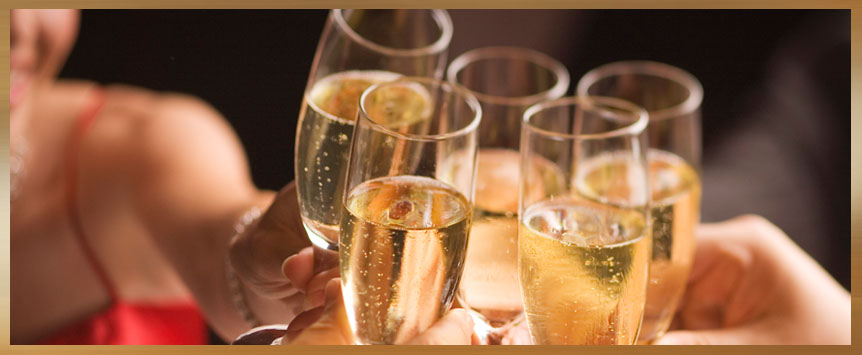
Whether you're a Champagne enthusiast or just enjoy a little bubbly from time to time, we invite you to explore this sparkling favorite with us.
One of the most revered wine regions, the location by the same name has been known for excellence since the 5th century. Located in France farther north than most other growing locations, its microclimate provides ideal conditions for both production and storage. This sparkling favorite may be aged undisturbed in cellars 60 feet underground, sometimes for decades.
Let's explore this classic together, shall we?

With the breadth of variety available in the Champagne family, there's a choice for nearly any menu. One could even host an entire dinner with sparkling choices paired with each course.
Start with a lighter nonvintage selection to complement appetizers and salads. A blanc de blancs is an ideal choice alongside main courses like tuna and salmon, while a richer blanc de noir or rosé will pair perfectly with heartier choices like lobster and steak. For these, select a vintage variety with more depth and color.
As a general rule, the deeper the color, the fuller the body – all the better to pair with your celebratory fare. For more tips like these, download our app, The Capital Grille Concierge.
Whether you're toasting a special occasion or just enjoying a bottle with dinner, Champagne is at its very best when it’s served chilled.
There are a few ways to obtain its optimal temperature of 40°F. Traditionally, a bottle is chilled in an ice bucket with a 50/50 combination of water and ice – 20 minutes and it's ready to serve. You may also chill it in the refrigerator for 90 minutes, or place the bottle in the freezer for 15 minutes.
When you join us for dinner, simply call ahead and we’ll be pleased to chill it for you.
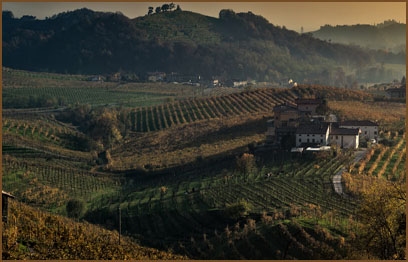
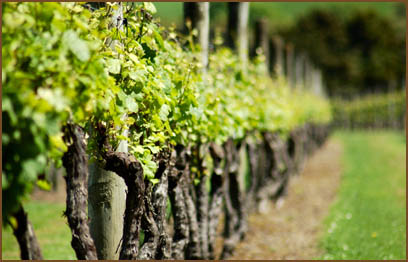
With a centuries-old reputation for superiority, the region of Champagne features an ideal climate with both brisk ocean air and land in which the vines thrive. Its near-ideal rainfall levels, coupled with a relatively limited amount of sunshine every year, impart the perfect crisp flavor that Champagne is known for.
Sparkling wine, in comparison, can be produced using the same two-step fermentation process. While they may not share origin or varietal, the flavors, body and effervescence can be similar to true Champagne. Of course, either makes a delightful addition to any occasion – we invite you to explore them both.

What's the difference between vintage and nonvintage? Simply put, vintage Champagne is a product of one perfect growing season. Only a few harvests each decade will be worthy of a vintage label, and each of these will be aged a minimum of three years, many for much longer.
Each bottle of nonvintage, by comparison, is carefully crafted with its own richly layered story. Master vintners and the chef de cave rely on their expert palates to blend the harvest from one year with the very best from years past – sometimes those have been harvested up to 25 (or more) years ago.
Whether you choose a product of an ideal year or the history in a bottle of a nonvintage, there’s something for every toast and celebration.
On that note, we invite you to turn to an expert to learn the intricacies of opening your next bottle of Champagne or sparkling wine.

